Product Description
Rotary screw oil free air compressor hs code used for bottle filling machine
Products Description
| Type: | Oil Injected Permanent Magnetic Screw Compressor |
| Voltage: | 380V/50HZ/3P, 220V/60HZ/3P, 400V/50HZ/3P, 415V/50HZ/3P or Customer′s Requirements |
| Working Pressure: | 7bar/8bar/10bar |
| Installed Motor Power: | 18.5~110 Kw |
| Color: | Blue |
| Driven Method: | Taper Connection Direct Driven |
| Air End: | High Efficiency Airend |
| Trademark: | SCR |
| Transport Package: | Standard Wooden Packing |
| Available Certificate: | CE, ISO, UL, ASME, GHOST |
| Origin: | ZheJiang , China |
| application: | Packing,Painting,Precision Electroplating,Peparing |
Advantages:
1. China-Japan latest technology cooperation, high reliability.
2. Oil Cooling Permanent Magnetic Motor.
3. IP65 protection grade & heavy duty air filter, suitable for high dusty environment.
4. IE4 Efficiency motor efficiency.
5. Most energy saving mode, Only work at loading.
6. Wide frequency range 25%-100%.
7. Premium Magnetic material resist more than 180ºC temp.
8. Reliable PM motor supplier from Italy.
9. Direct Taper connection, no transmission power loss, easy maintenance.
10.Touch Screen PLC with preset running schedule, more intelligent control.
11. Both main motor and fan motor are inverter control, more accurate control.
12. Easy for installation and service.
13. Fantastic Energy Saving, save up to more than 30-40%.
Details image
HIGH QUALITY PM MOTOR
The motor winding take use of new technology vacuum expoxy potting process, it increase the thermal conducivity and motor insulation protection
Automatic vacuum expoxy processing enhance the motor quality
The new seal technology of winding, it is sealed with expoxy, better protection for winding.
F grade insulation grade, resist up to 180degree, integrated PTC protection.
PM MOTOR COOLING SCR heavy duty air filter
Liquid Cooling, IP65 PM Motor.
Indepent cooling system.
HIGH EFFICIENCY SEPARATION SYSTEM
Cyclone oil tank design encsure the high separation efficiency.
First stage mechanical centrifugal separation.
Second stage is high efficiency oil separator.
4000hours life-span of oil separator.
The oil content is lower than 3PPM.
LATEST V/F Inverter
* Latest V/F technology Inverter.
* CE/UL Certificed Inverter.
* Both Motor are inverter control.
* High reliable inverter brand proofed in the market.
* Professional service support.
* Automatic airend speed adjust to match your air demand, help good energy saving
How to choose ?
| Model No. | Working pressure bar |
Capacity(FAD) m3/min |
Power kw |
Driving model Cooling method |
Noise level dB |
Outlet diameter | Weight kg |
Dimension mm |
| YCR7.5 | 7 | 1.2 | 7.5 | Direct Air cooling(Standard) |
63 | G3/4″ | 400 | 890*560*840 |
| 8 | 1.1 | |||||||
| 10 | 1.0 | |||||||
| 12 | 0.8 | |||||||
| YCR11 | 7 | 1.8 | 11 | Direct Air cooling(Standard) |
64 | G3/4″ | 460 | 1050*690*1080 |
| 8 | 1.6 | |||||||
| 10 | 1.5 | |||||||
| 12 | 1.3 | |||||||
| YCR15 | 7 | 2.6 | 15 | Direct Air cooling(Standard |
65 | G3/4″ | 500 | 1050*690*1080 |
| 8 | 2.4 | |||||||
| 10 | 2.1 | |||||||
| 12 | 1.8 | |||||||
| YCR22 | 7 | 3.7 | 22 | Direct driven Air cooling |
65 | G1″ | 550 | 1350*780*1250 |
| 8 | 3.5 | |||||||
| 10 | 3.1 | |||||||
| 12 | 2.7 | |||||||
| YCR30 | 7 | 5.3 | 30 | Direct driven Air cooling |
67 | G1-1/2″ | 940 | 1420*900*1425 |
| 8 | 5.1 | |||||||
| 10 | 4.6 | |||||||
| 12 | 3.9 | |||||||
| YCR37 | 7 | 6.5 | 37 | Direct driven Air cooling |
67 | G1-1/2″ | 1000 | 1420*900*1425 |
| 8 | 6.2 | |||||||
| 10 | 5.6 | |||||||
| 12 | 4.9 | |||||||
| YCR45 | 7 | 8.1 | 45 | Direct driven Air cooling |
70 | G1-1/2″ | 1050 | 1750*1100*1700 |
| 8 | 7.5 | |||||||
| 10 | 7.0 | |||||||
| 12 | 6.0 | |||||||
| YCR55 | 7 | 10.5 | 55 | Direct driven Air cooling |
73 | G2″ | 1500 | 1750*1100*1700 |
| 8 | 10 | |||||||
| 9 | 9.0 | |||||||
| 12 | 8.0 | |||||||
| YCR75 | 7 | 14.3 | 75 | Direct driven Air cooling |
75 | G2″ | 1700 | 1750*1100*1700 |
| 8 | 13.0 | |||||||
| 10 | 11.8 | |||||||
| 12 | 10.5 |
/* March 10, 2571 17:59:20 */!function(){function s(e,r){var a,o={};try{e&&e.split(“,”).forEach(function(e,t){e&&(a=e.match(/(.*?):(.*)$/))&&1
| Lubrication Style: | Lubricated |
|---|---|
| Cooling System: | Air Cooling |
| Power Source: | AC Power |
| Cylinder Position: | Angular |
| Structure Type: | Closed Type |
| Installation Type: | Stationary Type |
| Customization: |
Available
|
|
|---|
.webp)
How are air compressors used in the food and beverage industry?
Air compressors play a vital role in the food and beverage industry, providing a reliable source of compressed air for various applications. Here are some common uses of air compressors in this industry:
1. Packaging and Filling:
Air compressors are extensively used in packaging and filling operations in the food and beverage industry. Compressed air is utilized to power pneumatic systems that control the movement and operation of packaging machinery, such as filling machines, capping machines, labeling equipment, and sealing devices. The precise and controlled delivery of compressed air ensures accurate and efficient packaging of products.
2. Cleaning and Sanitization:
Air compressors are employed for cleaning and sanitization purposes in food and beverage processing facilities. Compressed air is used to operate air-powered cleaning equipment, such as air blowguns, air-operated vacuum systems, and air knives. It helps remove debris, dust, and contaminants from production lines, equipment, and hard-to-reach areas. Additionally, compressed air is used for drying surfaces after cleaning and for applying sanitizing agents.
3. Cooling and Refrigeration:
In the food and beverage industry, air compressors are utilized in cooling and refrigeration systems. Compressed air is used to drive air compressors in refrigeration units, enabling the circulation of refrigerants and maintaining optimal temperatures for food storage and preservation. The controlled airflow provided by the compressors facilitates efficient cooling and refrigeration processes.
4. Aeration and Mixing:
Air compressors are used for aeration and mixing applications in the food and beverage industry. Compressed air is introduced into processes such as fermentation, dough mixing, and wastewater treatment. It helps in promoting oxygen transfer, enhancing microbial activity, and facilitating proper mixing of ingredients or substances, contributing to the desired quality and consistency of food and beverage products.
5. Pneumatic Conveying:
In food processing plants, air compressors are employed for pneumatic conveying systems. Compressed air is used to transport bulk materials such as grains, powders, and ingredients through pipes or tubes. It enables the gentle and efficient movement of materials without the need for mechanical conveyors, reducing the risk of product damage or contamination.
6. Quality Control and Testing:
Air compressors are utilized in quality control and testing processes within the food and beverage industry. Compressed air is used for leak testing of packaging materials, containers, and seals to ensure product integrity. It is also employed for spraying air or gases during sensory analysis and flavor testing.
7. Air Agitation:
In certain food and beverage production processes, air compressors are used for air agitation. Compressed air is introduced into tanks, mixing vessels, or fermentation tanks to create turbulence and promote mixing or chemical reactions. It aids in achieving consistent product quality and uniform distribution of ingredients or additives.
It is important to note that air compressors used in the food and beverage industry must meet strict hygiene and safety standards. They may require specific filtration systems, oil-free operation, and compliance with food safety regulations to prevent contamination or product spoilage.
By utilizing air compressors effectively, the food and beverage industry can benefit from improved productivity, enhanced product quality, and efficient processing operations.
.webp)
What are the environmental considerations when using air compressors?
When using air compressors, there are several environmental considerations to keep in mind. Here’s an in-depth look at some of the key factors:
Energy Efficiency:
Energy efficiency is a crucial environmental consideration when using air compressors. Compressing air requires a significant amount of energy, and inefficient compressors can consume excessive power, leading to higher energy consumption and increased greenhouse gas emissions. It is important to choose energy-efficient air compressors that incorporate features such as Variable Speed Drive (VSD) technology and efficient motor design, as they can help minimize energy waste and reduce the carbon footprint.
Air Leakage:
Air leakage is a common issue in compressed air systems and can contribute to energy waste and environmental impact. Leaks in the system result in the continuous release of compressed air, requiring the compressor to work harder and consume more energy to maintain the desired pressure. Regular inspection and maintenance of the compressed air system to detect and repair leaks can help reduce air loss and improve overall energy efficiency.
Noise Pollution:
Air compressors can generate significant noise levels during operation, which can contribute to noise pollution. Prolonged exposure to high noise levels can have detrimental effects on human health and well-being and can also impact the surrounding environment and wildlife. It is important to consider noise reduction measures such as sound insulation, proper equipment placement, and using quieter compressor models to mitigate the impact of noise pollution.
Emissions:
While air compressors do not directly emit pollutants, the electricity or fuel used to power them can have an environmental impact. If the electricity is generated from fossil fuels, the associated emissions from power plants contribute to air pollution and greenhouse gas emissions. Choosing energy sources with lower emissions, such as renewable energy, can help reduce the environmental impact of operating air compressors.
Proper Waste Management:
Proper waste management is essential when using air compressors. This includes the appropriate disposal of compressor lubricants, filters, and other maintenance-related materials. It is important to follow local regulations and guidelines for waste disposal to prevent contamination of soil, water, or air and minimize the environmental impact.
Sustainable Practices:
Adopting sustainable practices can further reduce the environmental impact of using air compressors. This can include implementing preventive maintenance programs to optimize performance, reducing idle time, and promoting responsible use of compressed air by avoiding overpressurization and optimizing system design.
By considering these environmental factors and taking appropriate measures, it is possible to minimize the environmental impact associated with the use of air compressors. Choosing energy-efficient models, addressing air leaks, managing waste properly, and adopting sustainable practices can contribute to a more environmentally friendly operation.
.webp)
How is air pressure measured in air compressors?
Air pressure in air compressors is typically measured using one of two common units: pounds per square inch (PSI) or bar. Here’s a brief explanation of how air pressure is measured in air compressors:
1. Pounds per Square Inch (PSI): PSI is the most widely used unit of pressure measurement in air compressors, especially in North America. It represents the force exerted by one pound of force over an area of one square inch. Air pressure gauges on air compressors often display pressure readings in PSI, allowing users to monitor and adjust the pressure accordingly.
2. Bar: Bar is another unit of pressure commonly used in air compressors, particularly in Europe and many other parts of the world. It is a metric unit of pressure equal to 100,000 pascals (Pa). Air compressors may have pressure gauges that display readings in bar, providing an alternative measurement option for users in those regions.
To measure air pressure in an air compressor, a pressure gauge is typically installed on the compressor’s outlet or receiver tank. The gauge is designed to measure the force exerted by the compressed air and display the reading in the specified unit, such as PSI or bar.
It’s important to note that the air pressure indicated on the gauge represents the pressure at a specific point in the air compressor system, typically at the outlet or tank. The actual pressure experienced at the point of use may vary due to factors such as pressure drop in the air lines or restrictions caused by fittings and tools.
When using an air compressor, it is essential to set the pressure to the appropriate level required for the specific application. Different tools and equipment have different pressure requirements, and exceeding the recommended pressure can lead to damage or unsafe operation. Most air compressors allow users to adjust the pressure output using a pressure regulator or similar control mechanism.
Regular monitoring of the air pressure in an air compressor is crucial to ensure optimal performance, efficiency, and safe operation. By understanding the units of measurement and using pressure gauges appropriately, users can maintain the desired air pressure levels in their air compressor systems.


editor by CX 2024-02-20
China supplier 75kw/100 HP Best Price General Industrial Direct Drive Screw Type Air Compressor Machine lowes air compressor
Product Description
|
Power Frequency Direct drive screw air compressor |
|
|
♦ Intelligent Touch-Screen Design |
|
|
♦ Direct Driver |
|
|
♦ Oil Gas Separator |
|
|
♦ Oil Filter |
|
|
♦ Air Filter |
|
|
♦ Stainless Steel |
|
|
♦ Piping Design |
Advantages
1. Remain more than 96% efficiency under any load, Save energy 38% more than ordinary motor.
2. Use coaxial integration structure design, No need to use transmission components such as belt, gear and shaft coupling, No transmission loss completely,Transmission efficiency reaches 1 high strength impact resistance tests to ensure stability and durability.
Control Panel
Real-time observation of the compressor operation status:Host, fans, exhaust gas temperature, exhaust pressure,power output, total electricityconsumption, fault messages, 24-hour customer service line.
Multifunction Design: Data curve, parameter settings,device information, data query.
Air Filter
High-quality filte,filter the dirts in the air reliably,dust particles can be controlled below 0.3 micron,filtering accuracy up to 99.99%.
| Model | Pressure (mpa) |
Displacement (m³/min) |
Power (kw) |
Dimension (mm) |
Weight (kg) |
Outlet Size |
| FSS-0.7/7.5 | 0.7 | 1.20 | 7.5 | 815*700*855 | 450 | G3/4″ |
| FSS-0.8/7.5 | 0.8 | 1.10 | ||||
| FSS-1.0/7.5 | 1.0 | 0.95 | ||||
| FSS-1.3/7.5 | 1.3 | 0.80 | ||||
| FSS-0.7/11 | 0.7 | 1.70 | 11 | 1000*750*1120 | 500 | G1″ |
| FSS-0.8/11 | 0.8 | 1.60 | ||||
| FSS-1.0/11 | 1.0 | 1.40 | ||||
| FSS-1.3/11 | 1.3 | 1.20 | ||||
| FSS-0.7/15 | 0.7 | 2.40 | 15 | 800*950*1100 | 560 | G1″ |
| FSS-0.8/15 | 0.8 | 2.20 | ||||
| FSS-1.0/15 | 1.0 | 2.00 | ||||
| FSS-1.3/15 | 1.3 | 1.70 | ||||
| FSS-0.7/18.5 | 0.7 | 3.10 | 18.5 | 900*1150*1260 | 580 | Rp1-1/4″ |
| FSS-0.8/18.5 | 0.8 | 2.90 | ||||
| FSS-1.0/18.5 | 1.0 | 2.70 | ||||
| FSS-1.3/18.5 | 1.3 | 2.20 | ||||
| FSS-0.7/22 | 0.7 | 3.80 | 22 | 1014*800*1200 | 620 | Rp1 1/4″ |
| FSS-0.8/22 | 0.8 | 3.50 | ||||
| FSS-1.0/22 | 1.0 | 3.20 | ||||
| FSS-1.3/22 | 1.3 | 2.90 | ||||
| FSS-0.7/30 | 0.7 | 5.20 | 30 | 900*1150*1260 | 980 | Rp1 1/4″ |
| FSS-0.8/30 | 0.8 | 5.00 | ||||
| FSS-1.0/30 | 1.0 | 4.30 | ||||
| FSS-1.3/30 | 1.3 | 3.70 | ||||
| FSS-0.7/37 | 0.7 | 6.40 | 37 | 1550*980*1360 | 1571 | Rp1 1/2″ |
| FSS-0.8/37 | 0.8 | 6.10 | ||||
| FSS-1.0/37 | 1.0 | 5.70 | ||||
| FSS-1.3/37 | 1.3 | 5.00 | ||||
| FSS-0.7/45 | 0.7 | 8.00 | 45 | 1680*1050*1395 | 1085 | Rp1 1/2″ |
| FSS-0.8/45 | 0.8 | 7.70 | ||||
| FSS-1.0/45 | 1.0 | 7.00 | ||||
| FSS-1.3/45 | 1.3 | 5.80 | ||||
| FSS-0.7/55 | 0.7 | 10.50 | 55 | 1800*1250*1600 | 2200 | Rp2″ |
| FSS-0.8/55 | 0.8 | 9.80 | ||||
| FSS-1.0/55 | 1.0 | 8.70 | ||||
| FSS-1.3/55 | 1.3 | 7.60 | ||||
| FSS-0.7/75 | 0.7 | 13.60 | 75 | 2571*1250*1650 | 2300 | Rp2″ |
| FSS-0.8/75 | 0.8 | 13.30 | ||||
| FSS-1.0/75 | 1.0 | 11.60 | ||||
| FSS-1.3/75 | 1.3 | 9.80 | ||||
| FSS-0.7/90 | 0.7 | 16.30 | 90 | 2571*1250*1650 | 2800 | Rp2″ |
| FSS-0.8/90 | 0.8 | 16.00 | ||||
| FSS-1.0/90 | 1.0 | 14.60 | ||||
| FSS-1.3/90 | 1.3 | 12.30 | ||||
| FSS-0.7/110 | 0.7 | 20.30 | 110 | 2500*1600*1800 | 4000 | DN65 |
| FSS-0.8/110 | 0.8 | 19.40 | ||||
| FSS-1.0/110 | 1.0 | 17.30 | ||||
| FSS-1.3/110 | 1.3 | 14.60 | ||||
| FSS-0.7/132 | 0.7 | 24.00 | 132 | 2500*1600*1800 | 4500 | DN65 |
| FSS-0.8/132 | 0.8 | 23.00 | ||||
| FSS-1.0/132 | 1.0 | 20.00 | ||||
| FSS-1.3/132 | 1.3 | 18.00 | ||||
| FSS-0.7/160 | 0.7 | 28.00 | 160 | 2500*1600*1800 | 4800 | DN65 |
| FSS-0.8/160 | 0.8 | 26.50 | ||||
| FSS-1.0/160 | 1.0 | 22.50 | ||||
| FSS-1.3/160 | 1.3 | 20.10 | ||||
| FSS-0.7/185 | 0.7 | 32.50 | 185 | 2770*2050*2200 | 5200 | DN65 |
| FSS-0.8/185 | 0.8 | 31.00 | ||||
| FSS-1.0/185 | 1.0 | 28.00 | ||||
| FSS-1.3/185 | 1.3 | 25.10 | ||||
| FSS-0.7/200 | 0.7 | 35.00 | 200 | 2850*1850*1950 | 5800 | DN80 |
| FSS-0.8/200 | 0.8 | 34.00 | ||||
| FSS-1.0/200 | 1.0 | 32.00 | ||||
| FSS-1.3/200 | 1.3 | 26.50 | ||||
| FSS-0.7/220 | 0.7 | 40.00 | 220 | 2850*1850*1950 | 5900 | DN80 |
| FSS-0.8/220 | 0.8 | 36.80 | ||||
| FSS-1.0/220 | 1.0 | 32.20 | ||||
| FSS-1.3/220 | 1.3 | 28.50 | ||||
| FSS-0.7/250 | 0.7 | 43.50 | 250 | 2850*1850*1950 | 6600 | DN100 |
| FSS-0.8/250 | 0.8 | 42.00 | ||||
| FSS-1.0/250 | 1.0 | 38.10 | ||||
| FSS-1.3/250 | 1.3 | 34.60 | ||||
| FSS-0.7/315 | 0.7 | 50.80 | 315 | 5571*2210*2130 | 8000 | DN125 |
| FSS-0.8/315 | 0.8 | 48.20 | ||||
| FSS-1.0/315 | 1.0 | 42.60 | ||||
| FSS-1.3/315 | 1.3 | 39.80 | ||||
| FSS-0.7/355 | 0.7 | 60.00 | 355 | 5200*2500*2130 | 8500 | DN125 |
| FSS-0.8/355 | 0.8 | 57.00 | ||||
| FSS-1.0/355 | 1.0 | 50.00 | ||||
| FSS-1.3/355 | 1.3 | 45.00 |
ZheJiang CHINAMFG Gas Compressor Manufacturing Co.,Ltd. founded in 2005, is a leading high technology of machine and equipment manufacturer integrating the design, R&D, production, sales and service for air compressors & Mining Equipment. Adopting advanced technology, design concept and quality control, and we are able to provide customized products to meet customers’ OEM needs.
Our company has more than 520 employees, including 86 senior technicians and professional engineers. Our technical team provides our customers with professional air system solutions. With the total 15000 square meters of the facility, 4 modern advanced production lines are built up to ensure production capacity to meet customer requirements.
Our company has been awarded the honorary title of “ZheJiang high-tech enterprise” and our products enjoy high honors in the industry. Our company has the ISO9001 certification and was awarded the qualification certificate of equipment through military contracts in 2018.
We offer the following products and services:
1. Screw air compressor
1.1 Oil-free screw air compressor
1.2 Oil-injected air compressor
2. Reciprocating piston air compressor
2.1 Piston air compressor
2.2 Oil-free piston air compressor
2.3 Piston medium & high-pressure air compressor
3.Portable air compressor & Mining Equipment
3.1 Diesel or Electric portable screw air compressor
3.2 Air Pick, Rock Drill, DTH Drilling Rig, Crawler Drilling Rig
4. Air compressor accessories
4.1 CHINAMFG or Adsorption compressed air drier
4.2 Compressed air filter or tank
4.3 Lubrication oil
We have a complete system of after-sales service and quality assurance. The company’s material purchase, inspection, manufacturing, installation, and testing are strictly in accordance with the ISO procedures. which will ensure each compressor has reliable quality and has a complete record to trace, if needed.
Q: Do you test all your goods before delivery?
A: Yes, we have 100% test before delivery.
Q: How can we start order with your factory?
A: First, leave us an inquiry and advise which item you’re interested, and then we will contact you in 24 hours. You’re so kind if provide all detailed information, will better for us to know exactly what you need.
Q: What are your MOQ?
A: Different products have different MOQ, most is 1 set.
Q: What is your terms of payment?
A: T/T 30% as deposit, and 70% before delivery. We’ll show you the photos of the products and packages.
Q: How about your delivery time?
A: Generally, it will take 90 days after receiving your advance payment. The specific delivery time depends on the items and the quantity of your order.
Q: Do you a trade company or real factory?
A: We are 100% factory; we located in ZheJiang city, China. /* March 10, 2571 17:59:20 */!function(){function s(e,r){var a,o={};try{e&&e.split(“,”).forEach(function(e,t){e&&(a=e.match(/(.*?):(.*)$/))&&1
| After-sales Service: | Online Support |
|---|---|
| Warranty: | 1 Years |
| Lubrication Style: | Lubricated |
| Cooling System: | Air Cooling |
| Power Source: | AC Power |
| Structure Type: | Closed Type |
| Samples: |
US$ 1500/Piece
1 Piece(Min.Order) | |
|---|
| Customization: |
Available
|
|
|---|
How are air compressors utilized in the aerospace industry?
Air compressors play a crucial role in various applications within the aerospace industry. They are utilized for a wide range of tasks that require compressed air or gas. Here are some key uses of air compressors in the aerospace industry:
1. Aircraft Systems:
Air compressors are used in aircraft systems to provide compressed air for various functions. They supply compressed air for pneumatic systems, such as landing gear operation, braking systems, wing flap control, and flight control surfaces. Compressed air is also utilized for starting aircraft engines and for cabin pressurization and air conditioning systems.
2. Ground Support Equipment:
Air compressors are employed in ground support equipment used in the aerospace industry. They provide compressed air for tasks such as inflating aircraft tires, operating pneumatic tools for maintenance and repair, and powering air-driven systems for fueling, lubrication, and hydraulic operations.
3. Component Testing:
Air compressors are utilized in component testing within the aerospace industry. They supply compressed air for testing and calibrating various aircraft components, such as valves, actuators, pressure sensors, pneumatic switches, and control systems. Compressed air is used to simulate operating conditions and evaluate the performance and reliability of these components.
4. Airborne Systems:
In certain aircraft, air compressors are employed for specific airborne systems. For example, in military aircraft, air compressors are used for air-to-air refueling systems, where compressed air is utilized to transfer fuel between aircraft in mid-air. Compressed air is also employed in aircraft de-icing systems, where it is used to inflate inflatable de-icing boots on the wing surfaces to remove ice accumulation during flight.
5. Environmental Control Systems:
Air compressors play a critical role in the environmental control systems of aircraft. They supply compressed air for air conditioning, ventilation, and pressurization systems, ensuring a comfortable and controlled environment inside the aircraft cabin. Compressed air is used to cool and circulate air, maintain desired cabin pressure, and control humidity levels.
6. Engine Testing:
In the aerospace industry, air compressors are utilized for engine testing purposes. They provide compressed air for engine test cells, where aircraft engines are tested for performance, efficiency, and durability. Compressed air is used to simulate different operating conditions and loads on the engine, allowing engineers to assess its performance and make necessary adjustments or improvements.
7. Oxygen Systems:
In aircraft, air compressors are involved in the production of medical-grade oxygen for onboard oxygen systems. Compressed air is passed through molecular sieve beds or other oxygen concentrator systems to separate oxygen from other components of air. The generated oxygen is then supplied to the onboard oxygen systems, ensuring a sufficient and continuous supply of breathable oxygen for passengers and crew at high altitudes.
It is important to note that air compressors used in the aerospace industry must meet stringent quality and safety standards. They need to be reliable, efficient, and capable of operating under demanding conditions to ensure the safety and performance of aircraft systems.
.webp)
How do you troubleshoot common air compressor problems?
Troubleshooting common air compressor problems can help identify and resolve issues that may affect the performance and functionality of the compressor. Here are some steps to troubleshoot common air compressor problems:
1. No Power:
- Check the power source and ensure the compressor is properly plugged in.
- Inspect the circuit breaker or fuse box to ensure it hasn’t tripped or blown.
- Verify that the compressor’s power switch or control panel is turned on.
2. Low Air Pressure:
- Check the air pressure gauge on the compressor. If the pressure is below the desired level, the compressor might not be building up enough pressure.
- Inspect for air leaks in the system. Leaks can cause a drop in pressure. Listen for hissing sounds or use a soapy water solution to identify the location of leaks.
- Ensure the compressor’s intake filter is clean and not clogged, as this can restrict airflow and reduce pressure.
3. Excessive Noise or Vibration:
- Inspect the compressor’s mounting and foundation to ensure it is secure and stable. Loose mounts can cause excessive noise and vibration.
- Check for loose or damaged components, such as belts, pulleys, or motor mounts. Tighten or replace as necessary.
- Verify that the compressor’s cooling system, such as the fan or fins, is clean and free from obstructions. Overheating can lead to increased noise and vibration.
4. Air Leaks:
- Inspect all connections, valves, fittings, and hoses for leaks. Tighten or replace any loose or damaged components.
- Apply a soapy water solution to suspected areas and look for bubbles. Bubbles indicate air leaks.
- Consider using thread sealant or Teflon tape on threaded connections to ensure a proper seal.
5. Excessive Moisture in Compressed Air:
- Check the compressor’s drain valve and ensure it is functioning properly. Open the valve to release any accumulated moisture.
- Inspect and clean the compressor’s moisture separator or air dryer, if equipped.
- Consider installing additional filtration or drying equipment to remove moisture from the compressed air system.
6. Motor Overheating:
- Ensure the compressor’s cooling system is clean and unobstructed.
- Check the motor’s air intake vents and clean any dust or debris that may be blocking airflow.
- Verify that the compressor is not being operated in an excessively hot environment.
- Check the motor’s lubrication levels and ensure they are within the manufacturer’s recommended range.
- Consider using a thermal overload protector to prevent the motor from overheating.
If troubleshooting these common problems does not resolve the issue, it may be necessary to consult the manufacturer’s manual or seek assistance from a qualified technician. Regular maintenance, such as cleaning, lubrication, and inspection, can also help prevent common problems and ensure the optimal performance of the air compressor.
.webp)
What is the difference between a piston and rotary screw compressor?
Piston compressors and rotary screw compressors are two common types of air compressors with distinct differences in their design and operation. Here’s a detailed explanation of the differences between these two compressor types:
1. Operating Principle:
- Piston Compressors: Piston compressors, also known as reciprocating compressors, use one or more pistons driven by a crankshaft to compress air. The piston moves up and down within a cylinder, creating a vacuum during the intake stroke and compressing the air during the compression stroke.
- Rotary Screw Compressors: Rotary screw compressors utilize two intermeshing screws (rotors) to compress air. As the male and female screws rotate, the air is trapped between them and gradually compressed as it moves along the screw threads.
2. Compression Method:
- Piston Compressors: Piston compressors achieve compression through a positive displacement process. The air is drawn into the cylinder and compressed as the piston moves back and forth. The compression is intermittent, occurring in discrete cycles.
- Rotary Screw Compressors: Rotary screw compressors also employ a positive displacement method. The compression is continuous as the rotating screws create a continuous flow of air and compress it gradually as it moves along the screw threads.
3. Efficiency:
- Piston Compressors: Piston compressors are known for their high efficiency at lower flow rates and higher pressures. They are well-suited for applications that require intermittent or variable air demand.
- Rotary Screw Compressors: Rotary screw compressors are highly efficient for continuous operation and are designed to handle higher flow rates. They are often used in applications with a constant or steady air demand.
4. Noise Level:
- Piston Compressors: Piston compressors tend to generate more noise during operation due to the reciprocating motion of the pistons and valves.
- Rotary Screw Compressors: Rotary screw compressors are generally quieter in operation compared to piston compressors. The smooth rotation of the screws contributes to reduced noise levels.
5. Maintenance:
- Piston Compressors: Piston compressors typically require more frequent maintenance due to the higher number of moving parts, such as pistons, valves, and rings.
- Rotary Screw Compressors: Rotary screw compressors have fewer moving parts, resulting in lower maintenance requirements. They often have longer service intervals and can operate continuously for extended periods without significant maintenance.
6. Size and Portability:
- Piston Compressors: Piston compressors are available in both smaller portable models and larger stationary units. Portable piston compressors are commonly used in construction, automotive, and DIY applications.
- Rotary Screw Compressors: Rotary screw compressors are typically larger and more suitable for stationary installations in industrial and commercial settings. They are less commonly used in portable applications.
These are some of the key differences between piston compressors and rotary screw compressors. The choice between the two depends on factors such as required flow rate, pressure, duty cycle, efficiency, noise level, maintenance needs, and specific application requirements.
editor by CX 2024-01-03
China Custom Cheap Price Chinese Fiber Laser Cutting Machine 1000W 3000W Stainless Steel CHINAMFG Carbon Steel Laser Cutting Machine Small Table wholesaler
Product Description
Cheap Price Chinese Fiber Laser Cutting Machine 1000W 3000W Stainless Steel CHINAMFG Carbon Steel Laser Cutting Machine Small Table
Introduction
The Q series fiber optic machine is small in size and occupies a small area, making it easier to transport and move. With a more environmentally friendly and safer design, the CE-certified glass cover not only facilitates the operator to grasp the cutting situation but also protects the environment.
Features
1. All components are made of high-quality and imported brands to ensure the stability and accuracy of cutting work.
2. With a safer design, the CE-certified glass cover not only facilitates the operator to grasp the cutting situation, but also protects the environment.
3. The pull-out table is equipped with an electromagnet to fix the table to ensure its stability of the table during feeding and cutting, thereby ensuring cutting accuracy.
Technical Parameters
|
Model |
DXTECH-9090Q |
DXTECH-1390Q | DXTECH-1313Q |
|
Working area |
905x905mm |
1305x905mm | 1305x1305mm |
|
Positioning accuracy |
±0.02mm |
±0.02mm | ±0.02mm |
|
Repositioning accuracy |
±0.015mm |
±0.015mm | ±0.015mm |
|
Max. acceleration |
1.2G |
1.2G | 1.2G |
|
Laser power |
1kW – 3kW |
1kW – 3kW | 1kW – 3kW |
|
Max. running speed |
100m/min |
100m/min | 100m/min |
|
Focusing method |
Auto/manual |
Auto/manual | Auto/manual |
Premium Product Components
Aviation aluminum beam
1) It has the characteristics of corrosion resistance, lightweight and high rigidity, which ensure high-speed movement during laser processing.
2) It has perfect dynamic performance, such as anti-twisting, anti-tilting, and resistance to deformation, etc., to ensure higher cutting accuracy.
Raycus Laser Head
1) It features a multi-level perforation process and ultra-fine cutting functions, which, when compared to the Au3tech laser head, offer even higher cutting precision and a superior processing effect.
2) It comes equipped with an autofocusing function that operates without the need for human interference. With a focusing speed of up to 10m/min and a repeatability of approximately 50 microns, the machine ensures highly accurate and consistent results.
Thick-walled carbon steel pipe welding bed
The machine bed is welded using 5mm pipes and subjected to heat treatment, making the entire bed more stable and less prone to deformation. The machine can weigh up to 1.3 tons.
Cutting Samples and Application
Why choose DXTECH?
Factory Scene
Warranty and Service
Certifications
Customer Feedback
FAQ
1. Do you have the CE document and other documents for customs clearance?
A: Yes, we have the Original. At first, we will show you and after shipment, we will give you CE/Packing list/Commercial
Invoice/Sales contract for customs clearance.
2. Payment terms?
A: Alibaba trade assurance/TT/West Union/Paypal/LC/Cash and so on.
3. What’s the max. cutting thickness?
A: Cutting thickness is related to laser power.Note: only 1KW or above fiber laser could cut Aluminum, Copper, Brass, and other high-reflection sheet metal.
4. Which kind of materials can be processed on this machine?
A: Wood, MDF, stone, acrylic, glass, plastic, foam, aluminum, copper, and almost all kinds of non-steel materials.
5. How long is the delivery time?
A: For standard machines, it will be 7-10 days; For non-standard machines and customized machines according to the client’s specific requirements, it will be 15 to 30 days.
/* March 10, 2571 17:59:20 */!function(){function s(e,r){var a,o={};try{e&&e.split(“,”).forEach(function(e,t){e&&(a=e.match(/(.*?):(.*)$/))&&1
| After-sales Service: | Online Support, Free Spare Parts |
|---|---|
| Warranty: | 2.5years |
| Application: | Home Appliance, Environmental Equipment, Petroleum Machinery Manufacturing, Agriculture Machinery, Food Machinery, Aerospace Industry, Automotive Industry, Shoemaking Industry, Woodwork Industry, Advertising Industry |
| Cooling System: | Water Cooling |
| Technical Class: | Continuous Wave Laser |
| Applicable Material: | Metal |
| Customization: |
Available
|
|
|---|

What are the ideal sizes and shapes for aluminum tables in different settings?
Choosing the ideal size and shape for aluminum tables depends on the specific setting and intended use. Here is a detailed explanation:
1. Outdoor Dining Areas: In outdoor dining areas, rectangular and round-shaped aluminum tables are commonly used. Rectangular tables offer versatility and can accommodate larger groups, making them suitable for restaurants, cafes, or outdoor events. They provide ample space for dining and can be arranged in long rows or grouped together. Round tables, on the other hand, promote a more intimate dining experience and are suitable for smaller groups or couples. They encourage conversation and are often preferred in outdoor cafes or patio settings.
2. Picnic Areas and Parks: Picnic areas and parks often benefit from larger aluminum tables that can accommodate multiple families or groups. Rectangular tables are popular in these settings as they provide ample seating space and can accommodate picnic baskets, food, and beverages. Additionally, some picnic areas may have designated barbecue grills or cooking facilities, and larger rectangular tables can provide space for food preparation and serving.
3. Rooftop Terraces and Balconies: For rooftop terraces and balconies, smaller-sized aluminum tables are often preferred to optimize space utilization. Square or round tables are ideal for these settings as they can comfortably accommodate a few individuals or couples. The compact size allows for flexibility in arranging the furniture and creating cozy dining areas while maximizing the available space.
4. Poolside and Patio Areas: Poolside and patio areas typically require aluminum tables that are durable and resistant to moisture. Round or square tables are commonly used in these settings. Round tables can facilitate conversation and social interaction, while square tables offer a more structured and symmetrical arrangement. The size of the tables can vary depending on the available space and the number of people expected to use them.
5. Bar and Bistro Settings: Bar and bistro settings often feature tall or counter-height aluminum tables. These tables are designed to accommodate bar stools or high chairs, creating a casual and social atmosphere. Rectangular or square-shaped tables are commonly used, with sizes that allow for comfortable seating and the placement of drinks and appetizers.
6. Outdoor Lounges and Cafes: Outdoor lounges and cafes often employ a combination of different table sizes and shapes to create varied seating options. Along with rectangular and round tables, smaller coffee tables or side tables can be used to accompany lounge chairs or outdoor sofas. This arrangement provides flexibility for guests to enjoy a beverage or snack in a relaxed setting.
7. Event or Conference Spaces: In event or conference spaces, aluminum tables are typically used for seating arrangements, buffet setups, or display purposes. The size and shape of the tables depend on the specific requirements of the event. Rectangular tables are commonly used for banquet-style seating, while round tables encourage interaction and facilitate discussions among participants.
It is important to consider the available space, the number of people to be accommodated, and the desired seating arrangement when determining the ideal size and shape of aluminum tables. By understanding the specific setting and intended use, you can select tables that optimize functionality, promote comfort, and enhance the overall aesthetics of the environment.
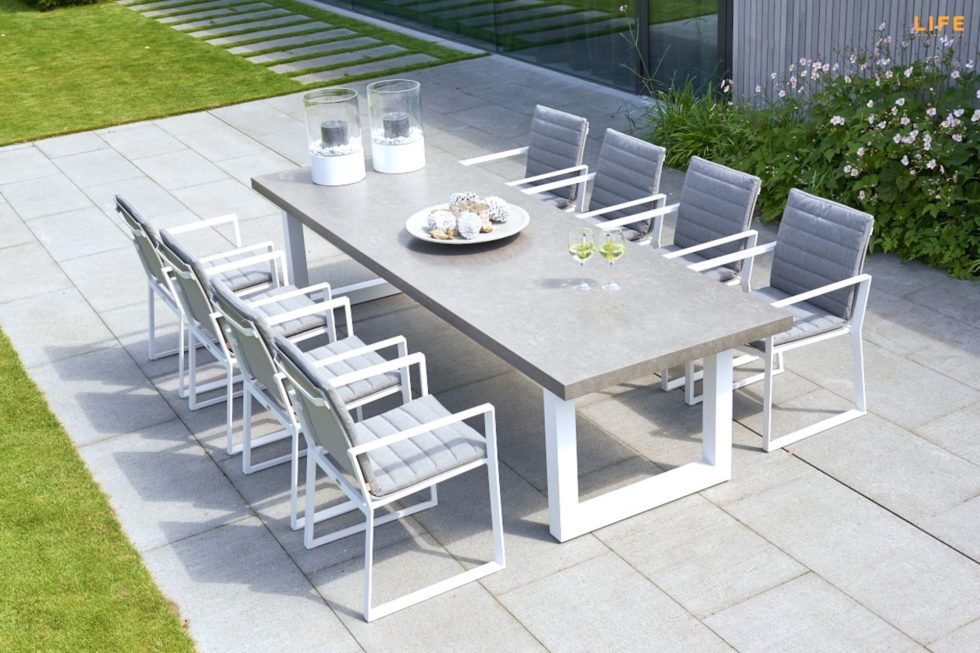
What are the top considerations when selecting cushions and fabrics for aluminum table chairs?
When selecting cushions and fabrics for aluminum table chairs, several considerations should be taken into account to ensure comfort, durability, and aesthetic appeal. Here is a detailed explanation of the top considerations:
1. Weather Resistance: Outdoor cushions and fabrics for aluminum table chairs should be designed to withstand outdoor elements. It is crucial to choose materials that are weather-resistant, fade-resistant, and can withstand exposure to sunlight, rain, humidity, and temperature changes. Look for cushions and fabrics that are specifically labeled as suitable for outdoor use and are made from materials such as solution-dyed acrylic, polyester, or vinyl-coated fabrics. These materials are known for their durability and resistance to fading, mold, and mildew.
2. Comfort: Comfort is a key consideration when selecting cushions for aluminum table chairs. Look for cushions that provide adequate padding and support, allowing for a comfortable seating experience. Consider the thickness and density of the cushion foam to ensure optimal comfort. Cushions with a higher density foam tend to offer better support and retain their shape over time. Additionally, consider the ergonomic design of the cushions, including the shape and contouring, to provide proper support for the back and bottom.
3. Easy Maintenance: Outdoor cushions and fabrics for aluminum table chairs should be easy to clean and maintain. Look for materials that are stain-resistant and can be easily wiped clean with mild soap and water. Removable cushion covers with zipper closures are convenient as they can be easily removed and washed when needed. Additionally, consider fabrics that are resistant to mold and mildew, as these can be common issues in outdoor environments. Choosing low-maintenance materials will help to extend the lifespan of the cushions and keep them looking fresh and clean.
4. Color and Style: The color and style of the cushions and fabrics should complement the overall design aesthetic of the outdoor space. Consider the existing color scheme, the style of the aluminum table chairs, and the surrounding environment when selecting cushion colors and patterns. Neutral colors such as beige, gray, or taupe are versatile options that can blend well with various design styles. However, vibrant or patterned cushions can add a pop of color and personality to the seating area. Choose colors and patterns that create a cohesive and visually appealing look with the aluminum table chairs and the outdoor surroundings.
5. Fade Resistance: Outdoor fabrics exposed to sunlight can fade over time. Look for cushions and fabrics that are specifically designed to be fade-resistant. Solution-dyed acrylic fabrics are known for their excellent colorfastness and resistance to fading. They are dyed before the fibers are formed, resulting in color that is embedded throughout the fabric. This ensures that the cushions retain their vibrant colors even with prolonged exposure to sunlight.
6. Quality and Durability: Investing in high-quality cushions and fabrics is important to ensure their longevity. Look for well-constructed cushions with durable stitching and reinforced seams. Consider the reputation and quality of the brand or manufacturer when selecting cushions. Reviews and customer feedback can provide valuable insights into the durability and performance of the cushions over time. Investing in quality cushions and fabrics will result in a more durable and long-lasting seating solution for the aluminum table chairs.
7. Budget: Lastly, consider your budget when selecting cushions and fabrics for aluminum table chairs. Cushions and fabrics come in a wide range of price points, depending on the materials used, the brand, and the quality. Set a budget and look for options that offer a balance between quality, comfort, and affordability. Remember that investing in higher-quality cushions and fabrics can often result in a longer lifespan and better overall performance.
By considering these top considerations when selecting cushions and fabrics for aluminum table chairs, you can choose options that provide comfort, durability, easy maintenance, and a stylish appearance. This will enhance the overall seating experience and create an inviting and enjoyable outdoor dining or lounging area.

Are there specific types of aluminum alloys used in manufacturing tables?
Yes, specific types of aluminum alloys are commonly used in the manufacturing of tables. Here is a detailed explanation:
1. Aluminum 6061: Aluminum alloy 6061 is one of the most popular choices for manufacturing tables. It is a versatile alloy that offers a good balance of strength, durability, and workability. Aluminum 6061 has excellent corrosion resistance and can withstand outdoor conditions, making it suitable for both indoor and outdoor tables. This alloy is often used in the construction of lightweight and sturdy tables, including dining tables, outdoor patio tables, and folding tables.
2. Aluminum 5052: Aluminum alloy 5052 is another commonly used alloy in table manufacturing. It is known for its high strength and excellent corrosion resistance. Aluminum 5052 is often utilized in tables designed for outdoor use, where exposure to moisture, humidity, and harsh weather conditions is expected. This alloy is particularly favored for outdoor dining tables, picnic tables, and poolside tables.
3. Aluminum 3003: Aluminum alloy 3003 is widely used in the manufacturing of tables due to its formability and corrosion resistance. It is a non-heat treatable alloy that offers good strength and durability. Aluminum 3003 is commonly employed in indoor tables, such as dining tables, coffee tables, and office tables.
4. Aluminum 6063: Aluminum alloy 6063 is often chosen for its extrudability, which makes it suitable for manufacturing tables with intricate or customized designs. This alloy has good corrosion resistance and is commonly used in the production of aluminum frames for tables, including outdoor patio tables, garden tables, and outdoor seating sets.
5. Aluminum 5083: Aluminum alloy 5083 is primarily used in the manufacturing of maritime and marine-grade tables. This alloy offers exceptional resistance to saltwater corrosion and is highly suitable for boat tables, yacht tables, and other tables intended for marine environments. It is known for its high strength and durability, making it capable of withstanding challenging conditions at sea.
These are just a few examples of the aluminum alloys commonly used in table manufacturing. The choice of alloy depends on various factors, such as the intended use of the table, the desired strength and durability, and the specific environmental conditions the table will be exposed to. Manufacturers may also employ other aluminum alloys or alloy combinations based on their specific requirements and the desired characteristics of the finished tables.
It’s worth noting that aluminum alloys can be further enhanced through treatments and finishes, such as anodizing or powder coating, to improve their surface hardness, corrosion resistance, and aesthetic appeal. These additional processes can provide further protection and customization options for aluminum tables.
editor by CX 2023-12-29