Product Description
Cheap Price Chinese Fiber Laser Cutting Machine 1000W 3000W Stainless Steel CHINAMFG Carbon Steel Laser Cutting Machine Small Table
Introduction
The Q series fiber optic machine is small in size and occupies a small area, making it easier to transport and move. With a more environmentally friendly and safer design, the CE-certified glass cover not only facilitates the operator to grasp the cutting situation but also protects the environment.
Features
1. All components are made of high-quality and imported brands to ensure the stability and accuracy of cutting work.
2. With a safer design, the CE-certified glass cover not only facilitates the operator to grasp the cutting situation, but also protects the environment.
3. The pull-out table is equipped with an electromagnet to fix the table to ensure its stability of the table during feeding and cutting, thereby ensuring cutting accuracy.
Technical Parameters
|
Model |
DXTECH-9090Q |
DXTECH-1390Q | DXTECH-1313Q |
|
Working area |
905x905mm |
1305x905mm | 1305x1305mm |
|
Positioning accuracy |
±0.02mm |
±0.02mm | ±0.02mm |
|
Repositioning accuracy |
±0.015mm |
±0.015mm | ±0.015mm |
|
Max. acceleration |
1.2G |
1.2G | 1.2G |
|
Laser power |
1kW – 3kW |
1kW – 3kW | 1kW – 3kW |
|
Max. running speed |
100m/min |
100m/min | 100m/min |
|
Focusing method |
Auto/manual |
Auto/manual | Auto/manual |
Premium Product Components
Aviation aluminum beam
1) It has the characteristics of corrosion resistance, lightweight and high rigidity, which ensure high-speed movement during laser processing.
2) It has perfect dynamic performance, such as anti-twisting, anti-tilting, and resistance to deformation, etc., to ensure higher cutting accuracy.
Raycus Laser Head
1) It features a multi-level perforation process and ultra-fine cutting functions, which, when compared to the Au3tech laser head, offer even higher cutting precision and a superior processing effect.
2) It comes equipped with an autofocusing function that operates without the need for human interference. With a focusing speed of up to 10m/min and a repeatability of approximately 50 microns, the machine ensures highly accurate and consistent results.
Thick-walled carbon steel pipe welding bed
The machine bed is welded using 5mm pipes and subjected to heat treatment, making the entire bed more stable and less prone to deformation. The machine can weigh up to 1.3 tons.
Cutting Samples and Application
Why choose DXTECH?
Factory Scene
Warranty and Service
Certifications
Customer Feedback
FAQ
1. Do you have the CE document and other documents for customs clearance?
A: Yes, we have the Original. At first, we will show you and after shipment, we will give you CE/Packing list/Commercial
Invoice/Sales contract for customs clearance.
2. Payment terms?
A: Alibaba trade assurance/TT/West Union/Paypal/LC/Cash and so on.
3. What’s the max. cutting thickness?
A: Cutting thickness is related to laser power.Note: only 1KW or above fiber laser could cut Aluminum, Copper, Brass, and other high-reflection sheet metal.
4. Which kind of materials can be processed on this machine?
A: Wood, MDF, stone, acrylic, glass, plastic, foam, aluminum, copper, and almost all kinds of non-steel materials.
5. How long is the delivery time?
A: For standard machines, it will be 7-10 days; For non-standard machines and customized machines according to the client’s specific requirements, it will be 15 to 30 days.
/* March 10, 2571 17:59:20 */!function(){function s(e,r){var a,o={};try{e&&e.split(“,”).forEach(function(e,t){e&&(a=e.match(/(.*?):(.*)$/))&&1
| After-sales Service: | Online Support, Free Spare Parts |
|---|---|
| Warranty: | 2.5years |
| Application: | Home Appliance, Environmental Equipment, Petroleum Machinery Manufacturing, Agriculture Machinery, Food Machinery, Aerospace Industry, Automotive Industry, Shoemaking Industry, Woodwork Industry, Advertising Industry |
| Cooling System: | Water Cooling |
| Technical Class: | Continuous Wave Laser |
| Applicable Material: | Metal |
| Customization: |
Available
|
|
|---|

What are the ideal sizes and shapes for aluminum tables in different settings?
Choosing the ideal size and shape for aluminum tables depends on the specific setting and intended use. Here is a detailed explanation:
1. Outdoor Dining Areas: In outdoor dining areas, rectangular and round-shaped aluminum tables are commonly used. Rectangular tables offer versatility and can accommodate larger groups, making them suitable for restaurants, cafes, or outdoor events. They provide ample space for dining and can be arranged in long rows or grouped together. Round tables, on the other hand, promote a more intimate dining experience and are suitable for smaller groups or couples. They encourage conversation and are often preferred in outdoor cafes or patio settings.
2. Picnic Areas and Parks: Picnic areas and parks often benefit from larger aluminum tables that can accommodate multiple families or groups. Rectangular tables are popular in these settings as they provide ample seating space and can accommodate picnic baskets, food, and beverages. Additionally, some picnic areas may have designated barbecue grills or cooking facilities, and larger rectangular tables can provide space for food preparation and serving.
3. Rooftop Terraces and Balconies: For rooftop terraces and balconies, smaller-sized aluminum tables are often preferred to optimize space utilization. Square or round tables are ideal for these settings as they can comfortably accommodate a few individuals or couples. The compact size allows for flexibility in arranging the furniture and creating cozy dining areas while maximizing the available space.
4. Poolside and Patio Areas: Poolside and patio areas typically require aluminum tables that are durable and resistant to moisture. Round or square tables are commonly used in these settings. Round tables can facilitate conversation and social interaction, while square tables offer a more structured and symmetrical arrangement. The size of the tables can vary depending on the available space and the number of people expected to use them.
5. Bar and Bistro Settings: Bar and bistro settings often feature tall or counter-height aluminum tables. These tables are designed to accommodate bar stools or high chairs, creating a casual and social atmosphere. Rectangular or square-shaped tables are commonly used, with sizes that allow for comfortable seating and the placement of drinks and appetizers.
6. Outdoor Lounges and Cafes: Outdoor lounges and cafes often employ a combination of different table sizes and shapes to create varied seating options. Along with rectangular and round tables, smaller coffee tables or side tables can be used to accompany lounge chairs or outdoor sofas. This arrangement provides flexibility for guests to enjoy a beverage or snack in a relaxed setting.
7. Event or Conference Spaces: In event or conference spaces, aluminum tables are typically used for seating arrangements, buffet setups, or display purposes. The size and shape of the tables depend on the specific requirements of the event. Rectangular tables are commonly used for banquet-style seating, while round tables encourage interaction and facilitate discussions among participants.
It is important to consider the available space, the number of people to be accommodated, and the desired seating arrangement when determining the ideal size and shape of aluminum tables. By understanding the specific setting and intended use, you can select tables that optimize functionality, promote comfort, and enhance the overall aesthetics of the environment.
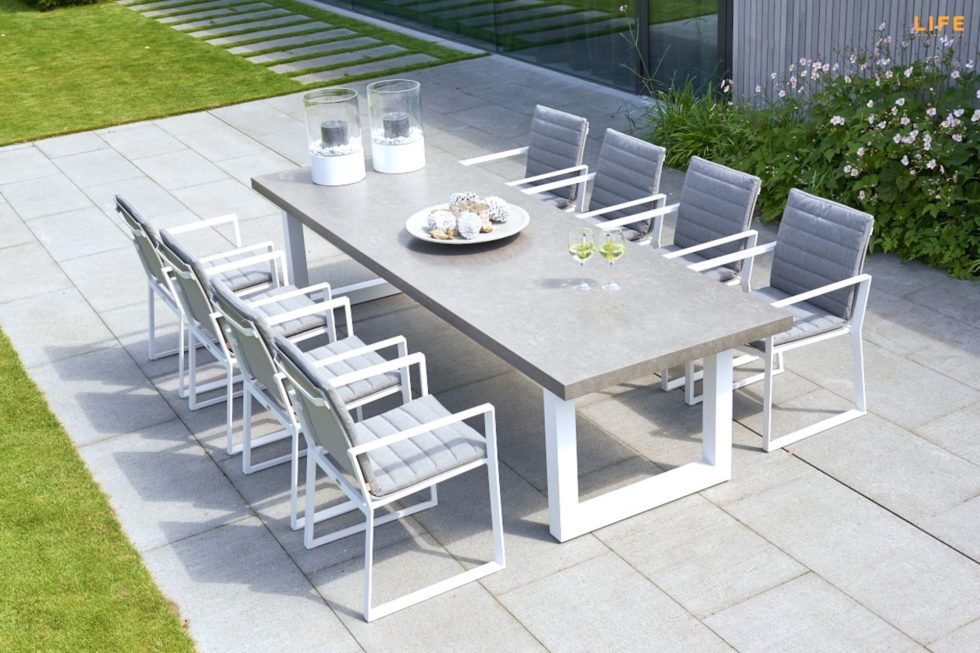
What are the top considerations when selecting cushions and fabrics for aluminum table chairs?
When selecting cushions and fabrics for aluminum table chairs, several considerations should be taken into account to ensure comfort, durability, and aesthetic appeal. Here is a detailed explanation of the top considerations:
1. Weather Resistance: Outdoor cushions and fabrics for aluminum table chairs should be designed to withstand outdoor elements. It is crucial to choose materials that are weather-resistant, fade-resistant, and can withstand exposure to sunlight, rain, humidity, and temperature changes. Look for cushions and fabrics that are specifically labeled as suitable for outdoor use and are made from materials such as solution-dyed acrylic, polyester, or vinyl-coated fabrics. These materials are known for their durability and resistance to fading, mold, and mildew.
2. Comfort: Comfort is a key consideration when selecting cushions for aluminum table chairs. Look for cushions that provide adequate padding and support, allowing for a comfortable seating experience. Consider the thickness and density of the cushion foam to ensure optimal comfort. Cushions with a higher density foam tend to offer better support and retain their shape over time. Additionally, consider the ergonomic design of the cushions, including the shape and contouring, to provide proper support for the back and bottom.
3. Easy Maintenance: Outdoor cushions and fabrics for aluminum table chairs should be easy to clean and maintain. Look for materials that are stain-resistant and can be easily wiped clean with mild soap and water. Removable cushion covers with zipper closures are convenient as they can be easily removed and washed when needed. Additionally, consider fabrics that are resistant to mold and mildew, as these can be common issues in outdoor environments. Choosing low-maintenance materials will help to extend the lifespan of the cushions and keep them looking fresh and clean.
4. Color and Style: The color and style of the cushions and fabrics should complement the overall design aesthetic of the outdoor space. Consider the existing color scheme, the style of the aluminum table chairs, and the surrounding environment when selecting cushion colors and patterns. Neutral colors such as beige, gray, or taupe are versatile options that can blend well with various design styles. However, vibrant or patterned cushions can add a pop of color and personality to the seating area. Choose colors and patterns that create a cohesive and visually appealing look with the aluminum table chairs and the outdoor surroundings.
5. Fade Resistance: Outdoor fabrics exposed to sunlight can fade over time. Look for cushions and fabrics that are specifically designed to be fade-resistant. Solution-dyed acrylic fabrics are known for their excellent colorfastness and resistance to fading. They are dyed before the fibers are formed, resulting in color that is embedded throughout the fabric. This ensures that the cushions retain their vibrant colors even with prolonged exposure to sunlight.
6. Quality and Durability: Investing in high-quality cushions and fabrics is important to ensure their longevity. Look for well-constructed cushions with durable stitching and reinforced seams. Consider the reputation and quality of the brand or manufacturer when selecting cushions. Reviews and customer feedback can provide valuable insights into the durability and performance of the cushions over time. Investing in quality cushions and fabrics will result in a more durable and long-lasting seating solution for the aluminum table chairs.
7. Budget: Lastly, consider your budget when selecting cushions and fabrics for aluminum table chairs. Cushions and fabrics come in a wide range of price points, depending on the materials used, the brand, and the quality. Set a budget and look for options that offer a balance between quality, comfort, and affordability. Remember that investing in higher-quality cushions and fabrics can often result in a longer lifespan and better overall performance.
By considering these top considerations when selecting cushions and fabrics for aluminum table chairs, you can choose options that provide comfort, durability, easy maintenance, and a stylish appearance. This will enhance the overall seating experience and create an inviting and enjoyable outdoor dining or lounging area.

Are there specific types of aluminum alloys used in manufacturing tables?
Yes, specific types of aluminum alloys are commonly used in the manufacturing of tables. Here is a detailed explanation:
1. Aluminum 6061: Aluminum alloy 6061 is one of the most popular choices for manufacturing tables. It is a versatile alloy that offers a good balance of strength, durability, and workability. Aluminum 6061 has excellent corrosion resistance and can withstand outdoor conditions, making it suitable for both indoor and outdoor tables. This alloy is often used in the construction of lightweight and sturdy tables, including dining tables, outdoor patio tables, and folding tables.
2. Aluminum 5052: Aluminum alloy 5052 is another commonly used alloy in table manufacturing. It is known for its high strength and excellent corrosion resistance. Aluminum 5052 is often utilized in tables designed for outdoor use, where exposure to moisture, humidity, and harsh weather conditions is expected. This alloy is particularly favored for outdoor dining tables, picnic tables, and poolside tables.
3. Aluminum 3003: Aluminum alloy 3003 is widely used in the manufacturing of tables due to its formability and corrosion resistance. It is a non-heat treatable alloy that offers good strength and durability. Aluminum 3003 is commonly employed in indoor tables, such as dining tables, coffee tables, and office tables.
4. Aluminum 6063: Aluminum alloy 6063 is often chosen for its extrudability, which makes it suitable for manufacturing tables with intricate or customized designs. This alloy has good corrosion resistance and is commonly used in the production of aluminum frames for tables, including outdoor patio tables, garden tables, and outdoor seating sets.
5. Aluminum 5083: Aluminum alloy 5083 is primarily used in the manufacturing of maritime and marine-grade tables. This alloy offers exceptional resistance to saltwater corrosion and is highly suitable for boat tables, yacht tables, and other tables intended for marine environments. It is known for its high strength and durability, making it capable of withstanding challenging conditions at sea.
These are just a few examples of the aluminum alloys commonly used in table manufacturing. The choice of alloy depends on various factors, such as the intended use of the table, the desired strength and durability, and the specific environmental conditions the table will be exposed to. Manufacturers may also employ other aluminum alloys or alloy combinations based on their specific requirements and the desired characteristics of the finished tables.
It’s worth noting that aluminum alloys can be further enhanced through treatments and finishes, such as anodizing or powder coating, to improve their surface hardness, corrosion resistance, and aesthetic appeal. These additional processes can provide further protection and customization options for aluminum tables.
editor by CX 2023-12-29
China Best Sales Blow Moulding Machine Low Pressure Air Compressor with 0.45 Cubic Meter Air Tank small air compressor
Product Description
Blow Moulding Machine Low Pressure Air Compressor with 0.45 cubic meter air tank
| Model | CW-3.0/10(with 0.45 cubic meter air tank) |
| Power | 22kw |
| Exhaust capacity: | 3.0 m3/Min |
| Working pressure | 1.0Mpa |
| TANK | 0.45m3 |
| Machine Size | 2.10*1.10*1.90 |
| Machine Weight: | 850kg |
| Warranty: | 1 Year |
|---|---|
| Lubrication Style: | Lubricated |
| Cooling System: | Air Cooling |
| Cylinder Arrangement: | Balanced Opposed Arrangement |
| Cylinder Position: | Vertical |
| Structure Type: | Closed Type |
| Customization: |
Available
|
|
|---|
.webp)
Can air compressors be used for painting and sandblasting?
Yes, air compressors can be used for both painting and sandblasting applications. Here’s a closer look at how air compressors are utilized for painting and sandblasting:
Painting:
Air compressors are commonly used in painting processes, especially in automotive, industrial, and construction applications. Here’s how they are involved:
- Spray Guns: Air compressors power spray guns used for applying paint coatings. The compressed air atomizes the paint, creating a fine mist that can be evenly sprayed onto surfaces. The pressure and volume of the compressed air impact the spray pattern, coverage, and overall finish quality.
- Paint Mixers and Agitators: Compressed air is often used to power mixers and agitators that ensure proper blending of paint components. These devices use the compressed air to stir or circulate the paint, preventing settling and maintaining a consistent mixture.
- Airbrushing: Air compressors are essential for airbrushing techniques, which require precise control over airflow and pressure. Airbrushes are commonly used in artistic applications, such as illustrations, murals, and fine detailing work.
Sandblasting:
Air compressors play a crucial role in sandblasting operations, which involve propelling abrasive materials at high velocity to clean, etch, or prepare surfaces. Here’s how air compressors are used in sandblasting:
- Blasting Cabinets: Air compressors power blasting cabinets or booths, which are enclosed spaces where the sandblasting process takes place. The compressed air propels the abrasive media, such as sand or grit, through a nozzle or gun, creating a forceful stream that impacts the surface being treated.
- Abrasive Blasting Pots: Air compressors supply air to abrasive blasting pots or tanks that store and pressurize the abrasive media. The compressed air from the compressor enters the pot, pressurizing it and allowing for a controlled release of the abrasive material during the sandblasting process.
- Air Dryers and Filters: In sandblasting applications, it is crucial to have clean, dry air to prevent moisture and contaminants from affecting the abrasive blasting process and the quality of the surface being treated. Air compressors may be equipped with air dryers and filters to remove moisture, oil, and impurities from the compressed air.
When using air compressors for painting or sandblasting, it is important to consider factors such as the compressor’s pressure and volume output, the specific requirements of the application, and the type of tools or equipment being used. Consult the manufacturer’s guidelines and recommendations to ensure the air compressor is suitable for the intended painting or sandblasting tasks.
Proper safety measures, such as wearing protective gear and following established protocols, should always be followed when working with air compressors for painting and sandblasting applications.
.webp)
Are there differences between single-stage and two-stage air compressors?
Yes, there are differences between single-stage and two-stage air compressors. Here’s an in-depth explanation of their distinctions:
Compression Stages:
The primary difference between single-stage and two-stage air compressors lies in the number of compression stages they have. A single-stage compressor has only one compression stage, while a two-stage compressor has two sequential compression stages.
Compression Process:
In a single-stage compressor, the entire compression process occurs in a single cylinder. The air is drawn into the cylinder, compressed in a single stroke, and then discharged. On the other hand, a two-stage compressor utilizes two cylinders or chambers. In the first stage, air is compressed to an intermediate pressure in the first cylinder. Then, the partially compressed air is sent to the second cylinder where it undergoes further compression to reach the desired final pressure.
Pressure Output:
The number of compression stages directly affects the pressure output of the air compressor. Single-stage compressors typically provide lower maximum pressure levels compared to two-stage compressors. Single-stage compressors are suitable for applications that require moderate to low air pressure, while two-stage compressors are capable of delivering higher pressures, making them suitable for demanding applications that require greater air pressure.
Efficiency:
Two-stage compressors generally offer higher efficiency compared to single-stage compressors. The two-stage compression process allows for better heat dissipation between stages, reducing the chances of overheating and improving overall efficiency. Additionally, the two-stage design allows the compressor to achieve higher compression ratios while minimizing the work done by each stage, resulting in improved energy efficiency.
Intercooling:
Intercooling is a feature specific to two-stage compressors. Intercoolers are heat exchangers placed between the first and second compression stages. They cool down the partially compressed air before it enters the second stage, reducing the temperature and improving compression efficiency. The intercooling process helps to minimize heat buildup and reduces the potential for moisture condensation within the compressor system.
Applications:
The choice between a single-stage and two-stage compressor depends on the intended application. Single-stage compressors are commonly used for light-duty applications such as powering pneumatic tools, small-scale workshops, and DIY projects. Two-stage compressors are more suitable for heavy-duty applications that require higher pressures, such as industrial manufacturing, automotive service, and large-scale construction.
It is important to consider the specific requirements of the application, including required pressure levels, duty cycle, and anticipated air demand, when selecting between a single-stage and two-stage air compressor.
In summary, the main differences between single-stage and two-stage air compressors lie in the number of compression stages, pressure output, efficiency, intercooling capability, and application suitability.
What is the difference between a piston and rotary screw compressor?
Piston compressors and rotary screw compressors are two common types of air compressors with distinct differences in their design and operation. Here’s a detailed explanation of the differences between these two compressor types:
1. Operating Principle:
- Piston Compressors: Piston compressors, also known as reciprocating compressors, use one or more pistons driven by a crankshaft to compress air. The piston moves up and down within a cylinder, creating a vacuum during the intake stroke and compressing the air during the compression stroke.
- Rotary Screw Compressors: Rotary screw compressors utilize two intermeshing screws (rotors) to compress air. As the male and female screws rotate, the air is trapped between them and gradually compressed as it moves along the screw threads.
2. Compression Method:
- Piston Compressors: Piston compressors achieve compression through a positive displacement process. The air is drawn into the cylinder and compressed as the piston moves back and forth. The compression is intermittent, occurring in discrete cycles.
- Rotary Screw Compressors: Rotary screw compressors also employ a positive displacement method. The compression is continuous as the rotating screws create a continuous flow of air and compress it gradually as it moves along the screw threads.
3. Efficiency:
- Piston Compressors: Piston compressors are known for their high efficiency at lower flow rates and higher pressures. They are well-suited for applications that require intermittent or variable air demand.
- Rotary Screw Compressors: Rotary screw compressors are highly efficient for continuous operation and are designed to handle higher flow rates. They are often used in applications with a constant or steady air demand.
4. Noise Level:
- Piston Compressors: Piston compressors tend to generate more noise during operation due to the reciprocating motion of the pistons and valves.
- Rotary Screw Compressors: Rotary screw compressors are generally quieter in operation compared to piston compressors. The smooth rotation of the screws contributes to reduced noise levels.
5. Maintenance:
- Piston Compressors: Piston compressors typically require more frequent maintenance due to the higher number of moving parts, such as pistons, valves, and rings.
- Rotary Screw Compressors: Rotary screw compressors have fewer moving parts, resulting in lower maintenance requirements. They often have longer service intervals and can operate continuously for extended periods without significant maintenance.
6. Size and Portability:
- Piston Compressors: Piston compressors are available in both smaller portable models and larger stationary units. Portable piston compressors are commonly used in construction, automotive, and DIY applications.
- Rotary Screw Compressors: Rotary screw compressors are typically larger and more suitable for stationary installations in industrial and commercial settings. They are less commonly used in portable applications.
These are some of the key differences between piston compressors and rotary screw compressors. The choice between the two depends on factors such as required flow rate, pressure, duty cycle, efficiency, noise level, maintenance needs, and specific application requirements.


editor by CX 2023-12-14
China factory High Performance Stable Quality Construction Machine Air Compressor (R-7) small air compressor
Product Description
Products Description
| Product Name | Excavator Part Air Compressor R-7 |
| Quality | Excellent Quality |
| Application | Excavator |
| Color | as photos show |
| Model Number | Excavator Part Air Compressor R-7 |
| Warranty | 3 months |
| MOQ | 1 Set |
| Supply Ability | 3000pcs per week |
| Delivery Detail | Usually Within 3 Days After Payment Receipt |
| Port | HangZhou |
| Delivery Methods | Express:DHL Fedex EMS UPS or by Air/Sea |
| Payment Methods | T/T Western Union |
Our Products
1.Electric Parts
2.Bearing
3.Main Value and Relief Value
4.Hydraulic pump
Company Advantages
1. Our main products:Hydraulic Pump,Engine Parts,Electric Parts,Chassis Parts,Excavator Bucket and Teeth,Radiator,Full Gasket Kit Series,Maintenance Parts.
2.We adhere to the management principles of “quality first, customer first and credit-based” since the establishment of the company and always do our best to satisfy potential needs of our customers.
3.Sufficient inventor. No matter when you make order, we can ship goods as soon as possible.
4.The best and more professional service and after-sales service.
Packing & SHIPPING:
Shipping: By express (DHL,FEDEX,TNT, UPS,EMS), By air, By sea.
Package:Standard exporting packing or as required.
FAQ
1)Which brands of machinery you work with?
We supply parts for brands like: Hitachi,Caterpillar,Komatsu,Sumitomo,Hyundai,Kobelco,Liebherr,JCB,etc,We mainly do small to meddium size excavators.
2)Can you send us the price lists(so that we do not always bother you when we need the price info)?
Sorry that we do not have price list.You are welcomed to contact us if you have any interesting products.
3)Payment terms:
Flexible payment,T/T and WESTERN UNION.Your money is safe if we do business.
4)Shipment:
International express(DHL,Fedex,TNT…),Air and marine transportation are available.
As per your time request,considing of Volume and Weight in details,we will suggest you which is best way to shipment.
5)How do you make our business long-term and good relationship?
We keep good quality and competitive price to ensure our customers benefit.We respect every customer as our friend and we sincerely do business and make friends with them.no matter where they come from.
| Type: | Crawler Excavator, Air Condition Parts |
|---|---|
| Application: | Excavator Part, Excavator |
| Certification: | ISO9001: 2000 |
| Condition: | New |
| Usage: | Mining Excavator |
| Bucket: | Shovel |
| Customization: |
Available
|
|
|---|
.webp)
What is the role of air compressors in power generation?
Air compressors play a significant role in power generation, supporting various operations and equipment within the industry. Here are some key roles of air compressors in power generation:
1. Combustion Air Supply:
Air compressors are used to supply compressed air for the combustion process in power generation. In fossil fuel power plants, such as coal-fired or natural gas power plants, compressed air is required to deliver a steady flow of air to the burners. The compressed air helps in the efficient combustion of fuel, enhancing the overall performance and energy output of the power plant.
2. Instrumentation and Control:
Air compressors are utilized for instrumentation and control systems in power generation facilities. Compressed air is used to operate pneumatic control valves, actuators, and other pneumatic devices that regulate the flow of steam, water, and gases within the power plant. The reliable and precise control provided by compressed air ensures efficient and safe operation of various processes and equipment.
3. Cooling and Ventilation:
In power generation, air compressors are involved in cooling and ventilation applications. Compressed air is used to drive air-operated cooling fans and blowers, providing adequate airflow for cooling critical components such as generators, transformers, and power electronics. The compressed air also assists in maintaining proper ventilation in control rooms, substations, and other enclosed spaces, helping to dissipate heat and ensure a comfortable working environment.
4. Cleaning and Maintenance:
Air compressors are employed for cleaning and maintenance tasks in power generation facilities. Compressed air is utilized to blow away dust, dirt, and debris from equipment, machinery, and electrical panels. It helps in maintaining the cleanliness and optimal performance of various components, reducing the risk of equipment failure and improving overall reliability.
5. Pneumatic Tools and Equipment:
In power generation plants, air compressors provide the necessary compressed air for operating pneumatic tools and equipment. These tools include impact wrenches, pneumatic drills, grinders, and sandblasting equipment, which are utilized for installation, maintenance, and repair tasks. The high-pressure air generated by compressors enables efficient and reliable operation of these tools, enhancing productivity and reducing manual effort.
6. Nitrogen Generation:
Sometimes, air compressors are used in power generation for nitrogen generation. Compressed air is passed through a nitrogen generator system, which separates nitrogen from other components of air, producing a high-purity nitrogen gas stream. Nitrogen is commonly used in power plant applications, such as purging systems, blanketing in transformers, and generator cooling, due to its inert properties and low moisture content.
7. Start-up and Emergency Systems:
Air compressors are an integral part of start-up and emergency systems in power generation. Compressed air is utilized to power pneumatic starters for gas turbines, providing the initial rotation needed to start the turbine. In emergency situations, compressed air is also used to actuate emergency shutdown valves, safety systems, and fire suppression equipment, ensuring the safe operation and protection of the power plant.
Overall, air compressors contribute to the efficient and reliable operation of power generation facilities, supporting combustion processes, control systems, cooling, cleaning, and various other applications critical to the power generation industry.
.webp)
Can air compressors be integrated into automated systems?
Yes, air compressors can be integrated into automated systems, providing a reliable and versatile source of compressed air for various applications. Here’s a detailed explanation of how air compressors can be integrated into automated systems:
Pneumatic Automation:
Air compressors are commonly used in pneumatic automation systems, where compressed air is utilized to power and control automated machinery and equipment. Pneumatic systems rely on the controlled release of compressed air to generate linear or rotational motion, actuating valves, cylinders, and other pneumatic components. By integrating an air compressor into the system, a continuous supply of compressed air is available to power the automation process.
Control and Regulation:
In automated systems, air compressors are often connected to a control and regulation system to manage the compressed air supply. This system includes components such as pressure regulators, valves, and sensors to monitor and adjust the air pressure, flow, and distribution. The control system ensures that the air compressor operates within the desired parameters and provides the appropriate amount of compressed air to different parts of the automated system as needed.
Sequential Operations:
Integration of air compressors into automated systems enables sequential operations to be carried out efficiently. Compressed air can be used to control the timing and sequencing of different pneumatic components, ensuring that the automated system performs tasks in the desired order and with precise timing. This is particularly useful in manufacturing and assembly processes where precise coordination of pneumatic actuators is required.
Energy Efficiency:
Air compressors can contribute to energy-efficient automation systems. By incorporating energy-saving features such as Variable Speed Drive (VSD) technology, air compressors can adjust their power output according to the demand, reducing energy consumption during periods of low activity. Additionally, efficient control and regulation systems help optimize the use of compressed air, minimizing waste and improving overall energy efficiency.
Monitoring and Diagnostics:
Integration of air compressors into automated systems often includes monitoring and diagnostic capabilities. Sensors and monitoring devices can be installed to collect data on parameters such as air pressure, temperature, and system performance. This information can be used for real-time monitoring, preventive maintenance, and troubleshooting, ensuring the reliable operation of the automated system.
When integrating air compressors into automated systems, it is crucial to consider factors such as the specific requirements of the automation process, the desired air pressure and volume, and the compatibility of the compressor with the control and regulation system. Consulting with experts in automation and compressed air systems can help in designing an efficient and reliable integration.
In summary, air compressors can be seamlessly integrated into automated systems, providing the necessary compressed air to power and control pneumatic components, enabling sequential operations, and contributing to energy-efficient automation processes.
.webp)
Are there air compressors specifically designed for high-pressure applications?
Yes, there are air compressors specifically designed for high-pressure applications. These compressors are engineered to generate and deliver compressed air at significantly higher pressures than standard air compressors. Here are some key points about high-pressure air compressors:
1. Pressure Range: High-pressure air compressors are capable of producing compressed air at pressures typically ranging from 1000 to 5000 psi (pounds per square inch) or even higher. This is considerably higher than the typical range of 100 to 175 psi for standard air compressors.
2. Construction: High-pressure aircompressors feature robust construction and specialized components to withstand the higher pressures involved. They are designed with reinforced cylinders, pistons, valves, and seals that can handle the increased stress and prevent leaks or failures under high-pressure conditions.
3. Power: Generating high-pressure compressed air requires more power than standard compressors. High-pressure air compressors often have larger motors or engines to provide the necessary power to achieve the desired pressure levels.
4. Applications: High-pressure air compressors are utilized in various industries and applications where compressed air at elevated pressures is required. Some common applications include:
- Industrial manufacturing processes that involve high-pressure air for operations such as air tools, pneumatic machinery, and equipment.
- Gas and oil exploration and production, where high-pressure air is used for well drilling, well stimulation, and enhanced oil recovery techniques.
- Scuba diving and underwater operations, where high-pressure air is used for breathing apparatus and underwater tools.
- Aerospace and aviation industries, where high-pressure air is used for aircraft systems, testing, and pressurization.
- Fire services and firefighting, where high-pressure air compressors are used to fill breathing air tanks for firefighters.
5. Safety Considerations: Working with high-pressure air requires adherence to strict safety protocols. Proper training, equipment, and maintenance are crucial to ensure the safe operation of high-pressure air compressors. It is important to follow manufacturer guidelines and industry standards for high-pressure applications.
When selecting a high-pressure air compressor, consider factors such as the desired pressure range, required flow rate, power source availability, and the specific application requirements. Consult with experts or manufacturers specializing in high-pressure compressed air systems to identify the most suitable compressor for your needs.
High-pressure air compressors offer the capability to meet the demands of specialized applications that require compressed air at elevated pressures. Their robust design and ability to deliver high-pressure air make them essential tools in various industries and sectors.
editor by CX 2023-11-07